When I think about truly iconic vehicles, few come to mind as readily, or with as much warmth, as the Volkswagen Bus. It's more than just a vehicle; it’s a symbol of freedom, adventure, and a certain laid-back philosophy that has resonated across generations. From its humble beginnings to its modern electric reincarnation, the VW Bus, or Type 2 as it was originally known, has carved out a unique place in automotive history and our collective imagination. I find its journey absolutely fascinating.
The Humble Origins: A Post-War Vision Takes Shape
Our story starts in the aftermath of World War II. Volkswagen, under the leadership of Ivan Hirst and later Heinz Nordhoff, was primarily producing the Beetle (Type 1). But a clever Dutch importer, Ben Pon, observed the utilitarian plattenwagen (a factory internal transporter) at the Wolfsburg plant in 1947 and sketched out an idea for a simpler, more efficient box-on-wheels vehicle. This simple sketch, as we now know, laid the groundwork for what would become the Transporter.
Introduced in 1950, the first generation, internally called the Type 2 T1 and affectionately known as the Splitscreen or Splittie, was a marvel of practicality and ingenious engineering. It shared its rear-mounted, air-cooled engine and much of its chassis with the Beetle, making it robust and easy to maintain. Its design was utilitarian, yes, but also undeniably charming, with its distinctive V-shaped front panel and those two small, split windshields. You couldn't mistake it for anything else.
- Early Versatility: It wasn't just a passenger van; VW quickly introduced panel vans, pickups, and even ambulances.
- Engines: Initially a humble 1131cc engine producing just 25 horsepower. It wasn't about speed, you see; it was about getting there.
- Cultural Impact: By the 1960s, the Splittie had become the unofficial mascot of the counter-culture movement, symbolizing wanderlust and communal living.
Stepping Into the Sixties: The Bay Window T2
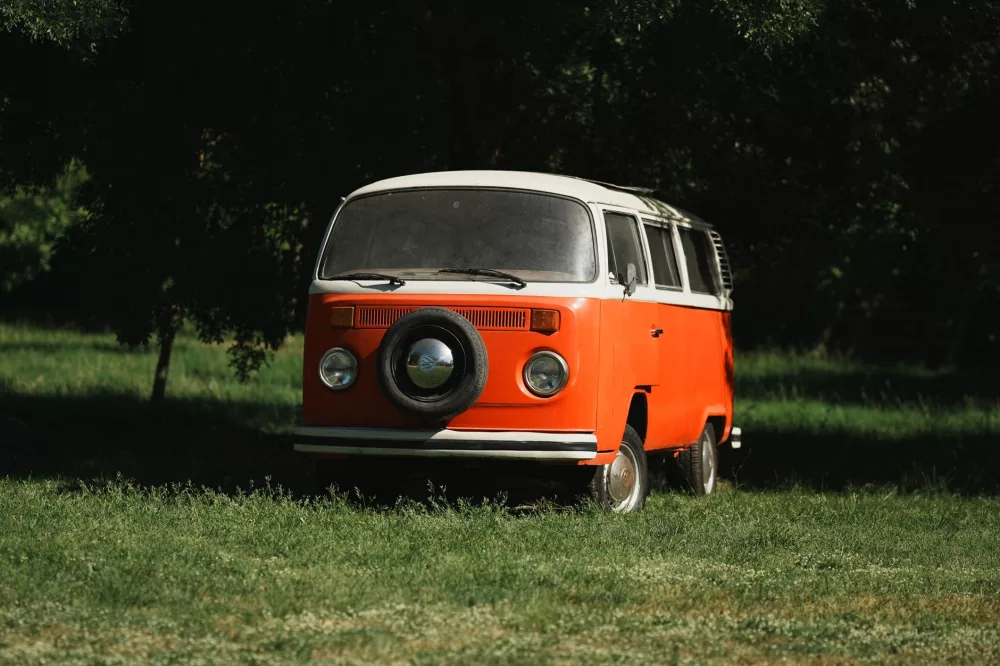
As the world moved into the late 1960s, Volkswagen introduced the second generation of the Transporter, the Type 2 T2, commonly called the Bay Window. Launched in 1967, this model brought significant updates. The most obvious change was the single, larger curved windshield, which replaced the previous split design, giving drivers a much better view of the road. I think this was a smart move for usability.
Beneath the surface, the T2 also received substantial improvements:
- A more powerful engine, eventually growing to 1.6L and later 2.0L.
- Improved suspension for a smoother ride, making longer journeys more comfortable.
- Better ventilation systems and slightly larger interiors.
- Sliding side door as standard, a practical addition for passengers and cargo.
The Bay Window continued the legacy of its predecessor, remaining a favorite among adventurers, surfers, and families who appreciated its spaciousness and reliability. It wasn't just a vehicle; for many, it represented a mobile home, an office, or even a statement of individuality. My guess is that many of us have seen one converted into a colorful campervan, brimming with character.
The Vanagon Era: Modernization Creeps In (T3)
When the Type 2 T3, known as the Vanagon in North America and Transporter or Caravelle elsewhere, debuted in 1979, it marked a significant departure in design. Gone were the rounder, more organic lines, replaced by a squarer, more angular aesthetic that reflected the automotive trends of the late 70s and 80s. It was physically larger and heavier than its predecessors, offering more interior room and improved crash safety.
What's really interesting about the T3 is that it was the last generation to retain the classic rear-engine layout. Initially, it still used air-cooled engines, but by 1982, water-cooled 'Wasserboxer' flat-four engines were introduced, offering better performance and heating. Later models even got inline-four and five-cylinder diesel and petrol engines from other VW models. It was a more sophisticated vehicle, designed for a new era, but it never quite lost that original VW Bus charm, did it?
A Radical Shift: The Front-Engine T4 and Beyond
The 1990 introduction of the Type 2 T4, known as the Eurovan in North America, represented a seismic shift in the Volkswagen Bus lineage. For the first time, the engine moved to the front, driving the front wheels. This radical redesign allowed for a much lower and flatter load floor, greatly enhancing practicality and interior space. The driving experience was also transformed; it felt much more like a modern car, with better handling and stability.
The T4 was a success, leading to the subsequent generations:
- T5 (2003-2015): Further refined, with more powerful and efficient engines, greater comfort, and advanced safety features.
- T6 (2015-present): An evolution of the T5, maintaining its core strengths while incorporating updated technology, improved fuel economy, and sharper styling.
These later generations, while immensely practical and popular as commercial vehicles and family transporters, moved further away from the 'hippie bus' image. They're undoubtedly excellent vehicles, but I think many of us still associate 'VW Bus' with those earlier, more whimsical designs.
The Electric Future: VW ID. Buzz
Now, we're witnessing a thrilling new chapter with the arrival of the Volkswagen ID. Buzz. This all-electric vehicle explicitly draws inspiration from the original Type 2 T1, particularly in its playful, retro-futuristic styling. It's Volkswagen's way of bringing that iconic spirit into the electric age, blending nostalgic design cues with cutting-edge EV technology. I've been really excited to see this come to fruition.
- Design Homage: Notice the short overhangs, distinctive two-tone paint options, and prominent VW badge. It’s a modern take on a classic.
- Sustainable Power: Zero-emission electric powertrain, reflecting contemporary environmental values.
- Smart Interior: Advanced infotainment, connectivity, and flexible interior configurations for both passenger and cargo versions.
The ID. Buzz isn't just a nod to the past; it's a bold statement about the future of mobility, showing how iconic design can be reimagined for a sustainable world. It's a journey from Ben Pon's sketch to a digital, electric dream.
Why It Endures: More Than Just Metal and Wheels
So, why does the Volkswagen Bus continue to capture hearts around the globe? I believe it's because it represents more than just transportation. It stands for adventure, for breaking free from the ordinary, for forging your own path. Whether it's a meticulously restored Splittie, a well-traveled Bay Window camper, or the sleek new ID. Buzz, each iteration carries a piece of that original spirit.
We don't just see a vehicle; we see potential road trips, campfires under starry skies, and countless memories waiting to be made. It's a global icon, a piece of automotive art that has influenced culture, music, and art. The VW Bus isn't just a machine; it's a friend, a home, and a symbol of enduring joy and exploration. And that, to me, is its most incredible legacy.